
Sewer Laterals That Moved With the Clay Around White Oak
Ground that swells every wet spring and shrinks every dry summer does not leave a buried pipe alone. We look inside the line before anybody decides where to dig.
Where a buried lateral starts to come apart
Your sewer lateral is the pipe carrying everything the house sends down its drains out toward the main. It was laid in a trench, bedded in dirt, and joined every few feet. Those joints are where it fails.
Gregg County clay soaks up rain and swells, then dries out and pulls back hard, and it repeats that every year the house stands. A rigid pipe sitting in that ground gets nudged a little each season until one joint opens by a hair.
A hair is plenty. Wastewater seeps out, and the damp soil around the gap becomes the best drink in the yard for a tree root in July. The root slips in thin, fattens inside the pipe, and starts catching paper.
Signs the lateral is the problem
- Two or more drains slow down or back up on the same day
- The lowest tub or a floor drain gurgles when the washer empties
- Stoppages that return on about the same schedule each year
Any one of those could be something smaller. Two together deserve a call to (903) 570-3051 before they become a weekend backup.
Low spots that hold water after every flush
A belly is a sag. Somewhere along the run, one section of pipe has settled lower than the pipe on either side, so water pools there on its way out.
Plenty of lines in this county went in dead straight, with proper fall, thirty or more years back. The clay has been moving under them since. A wet season softens a stretch of soil, a dry one shrinks it away, and a length of pipe drops an inch. A belly slows the flow for years before it ever stops it, which is why nobody notices.
What sits in that low spot is standing wastewater, and solids settle out of it. Grease films the walls. Every flush adds a little. The line works until the layer is thick enough to snag something, then quits all at once, so it feels sudden after years of quiet buildup.
Why only a camera finds it
From inside the house, a belly behaves exactly like roots or a broken joint. On the screen it is plain: the lens dips under water, travels submerged for a few feet, then climbs back out. The locator tells us where in the yard that stretch sits.
One bad length, or the whole run?
After the camera has been through, the conversation can only go two ways, and we would rather have it with the footage in front of both of us.
A short section
A single offset joint, one root entry, or one sag with healthy pipe on both sides calls for a spot repair. We open the ground at that point, cut out the bad length, set new pipe at the right fall, and tie it into sound pipe at each end. The rest of the lateral stays put because nothing is wrong with it.
A longer stretch
Roots at joint after joint, or sags one behind another down the yard, mean patching the worst spot sends you back to the phone next spring. A longer section, sometimes the full line, is what holds. We say that plainly, and we say just as plainly when the short repair is enough.
Either way, you hear a real price before any equipment rolls up. If the ground opens and shows something the camera could not, such as a second crack hidden under standing water, we stop and talk it over with you first.
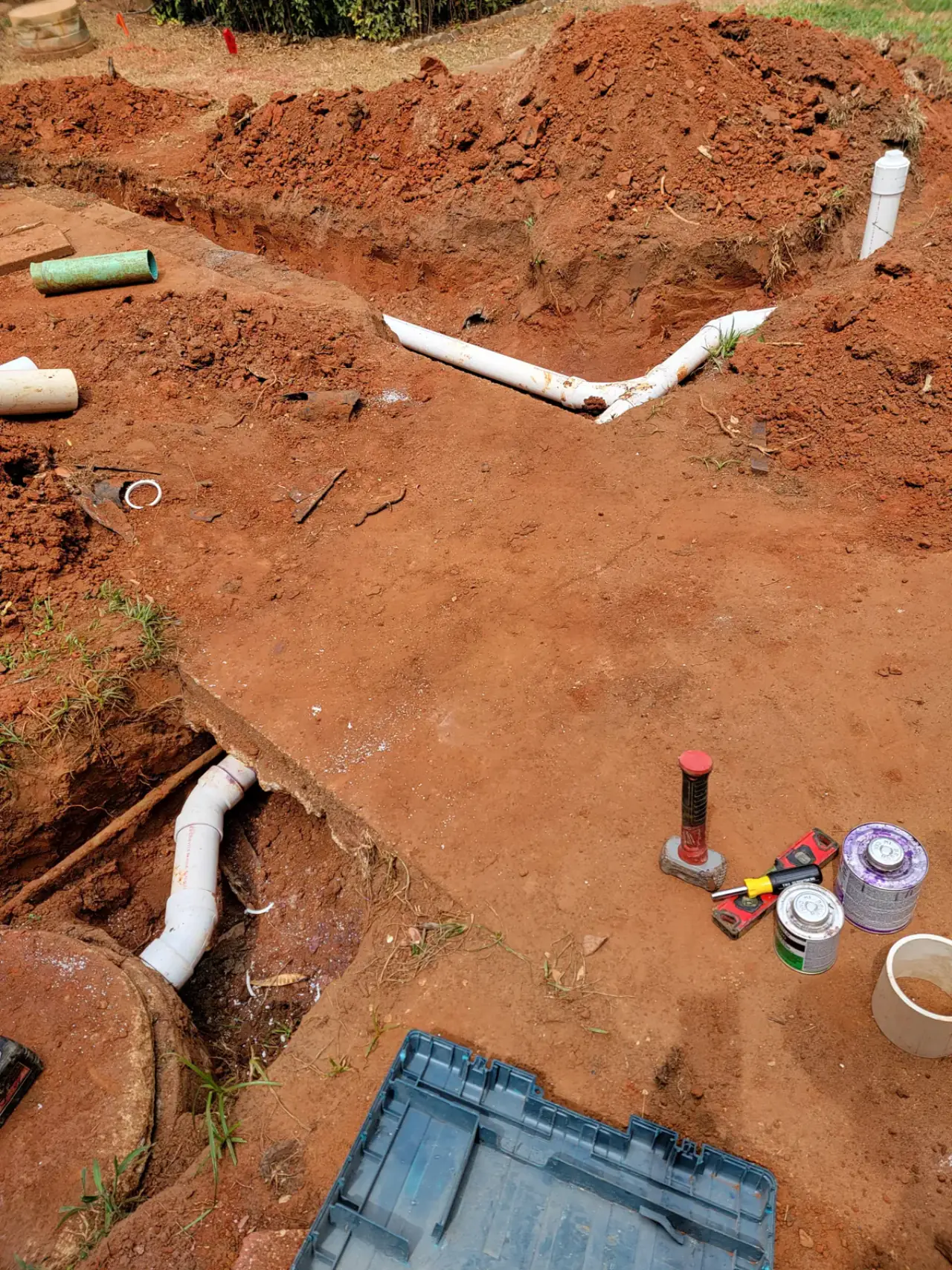
What a trench across the yard actually involves
Digging up a yard is the part people dread most, so here is how it goes from our side.
Marked first
The locator puts a mark over the defect, and buried utilities get located before any dirt moves. The opening follows the pipe only as far as the damage runs.
A cleanout while it is open
Lots of older lines have no cleanout, or one lost under grass. With the pipe exposed, setting a vertical riser is a small step that gives the next person easy access. We offer it; you decide.
Filling it back in
The clay goes back into the trench. Expect a bare strip that sinks a bit after the first hard rain. You hear how long the cut will be before we start.
Homeowner work in our home county
White Oak sits about 10 miles from Kilgore and well inside the area where we take homeowner work, so a homeowner with a backed-up lateral gets the same crew a commercial property would. Gregg County is home, and most of our work happens in it.
Call us and a person answers, usually Stephen Crutchfield, the licensed Master Plumber who owns Odyssey with Gicel Crutchfield and who reads the camera footage himself. The company is veteran-owned and family-run, and nearly all of our jobs now come from repeat customers and neighbors passing the number along. Digging somebody’s yard for no good reason would end that fast.
Houses that went up within a few years of each other tend to have laterals of the same age in the same ground. If the house next door just had its sewer dug, yours may be on a similar clock, and a camera look now is calmer than a backup later. Browse photos of finished jobs, or send us what your drains are doing.
More White Oak work from the same crew
Drain Cleaning
Clogs cleared, with a straight answer when the same one keeps returning.
Emergency Plumbing
Backups, burst pipes and no-water calls at any hour.
Leak Detection
Pinning down where the water is going before anything gets cut open.
Water Heater Repair
Flushes, pilots and elements checked before anyone mentions a new tank.
Hydro Jetting
High-pressure water that scours grease and root debris off the whole pipe wall.
How We Handle Sewer Repair
The same camera-first method wherever we work in East Texas.
Sewer questions from White Oak homeowners
How can I tell the lateral is the problem and not one drain?
Watch for more than one fixture acting up together. When the tub, the washer drain and a toilet all slow at once, the trouble sits downstream of all of them, which usually means the main line leaving the house. One slow sink is almost always just that sink.
Will cutting the roots out fix it?
It clears the pipe, and sometimes that is the right move for tonight. It does nothing about the open joint the roots came through, so they grow back to the same spot. If the line needs cutting every year, the joint is what needs attention.
Does a belly always mean digging?
A shallow sag in an otherwise healthy line can sometimes be kept flowing with regular cleaning, and we will tell you when that is a fair choice. A deep one that holds solids and keeps stopping up usually needs that section dug out and reset at the right fall.
What happens to my yard afterward?
The trench gets filled with the soil that came out of it. Grass takes a while to come back, and the strip usually settles after a good rain. We describe how long the cut will be and where it runs before any digging starts.
Should I add a cleanout while the line is open?
If your line has no cleanout you can reach, the day the pipe is already exposed is the easiest time to add one. It makes any future clearing quicker and cleaner inside the house. We point it out as an option and leave the decision with you.
Do you take commercial sewer work in White Oak?
Yes. White Oak sits inside our full service area, and commercial and industrial jobs are on the table alongside homeowner work. The camera step is the same on a business line. Scheduling around your hours is usually the part that changes.
Hearing gurgles from the floor drain?
Tell Stephen which drains are acting up and how often. Those two answers usually point toward the lateral, or away from it, before anybody climbs in a truck.
Call (903) 570-3051Easier to type it out?
List the fixtures that back up and whether you know of a cleanout in the yard. We will chart the job and show up ready for your line.
Odyssey Plumbing Co is regulated by the Texas State Board of Plumbing Examiners (TSBPE), 7915 Cameron Rd., Austin, TX 78754, (512) 936-5200, tsbpe.texas.gov. Stephen Crutchfield, Responsible Master Plumber License M-45845.