
Find the leak first, then open only what it takes
A water bill that keeps climbing with nothing running, or a warm spot on a tile floor. In White Oak we confirm there really is a leak and pin it down before a single square of floor gets opened.
Start at the water meter
Before anyone talks about cutting a floor, it is worth proving there is a leak at all. The meter is the most honest witness you have. Turn off every faucet, make sure the washer, dishwasher, ice maker, and sprinklers are idle, and go look at it. Most meters carry a small dial or triangle that turns with even a slow flow.
A test you can run this afternoon
- Close every fixture and appliance that uses water
- Write down the meter reading, or take a photo of the dial
- Leave everything off for an hour or two
- Read it again; any movement means water is leaving somewhere
If the meter moved, the next job is working out where. If it held perfectly still, the higher bill or damp spot has some other cause, and that is worth knowing before anybody gets paid to search for a leak that is not there. Tell us what your test showed, or call (903) 570-3051 with the readings in hand.
Supply side or drain side
Pressure lines
Supply pipe holds water under pressure all day, so a leak there runs whether or not anyone is home. That is the kind that moves the meter. Under a slab it can show up as a warm patch above a hot line, the hiss of running water with every tap closed, or a bill that creeps upward month after month.
Drain lines
Drain pipe only carries water while something is draining, and it is not under pressure, so a crack in it will never move the meter. Those leaks show up as dampness, odor, or staining that gets worse after showers or a load of laundry. Finding one is a different search, and the repair usually is too.
Sorting out which side you are dealing with comes first, because it decides every step after it. A meter that moves points us at supply pipe. A stain that only grows after the tub drains points us at the drain. When a house shows both at once, we work them as two separate problems, one at a time.
Slabs on ground that will not hold still
Plenty of houses around here sit on a concrete slab poured over clay, and Gregg County clay moves. It swells after rain and pulls back hard through a dry summer, and the slab flexes along with it. Pipe running through or beneath that slab takes the strain at fittings and anywhere it rubs concrete, and over the years those are the spots where pinholes and cracked joints start.
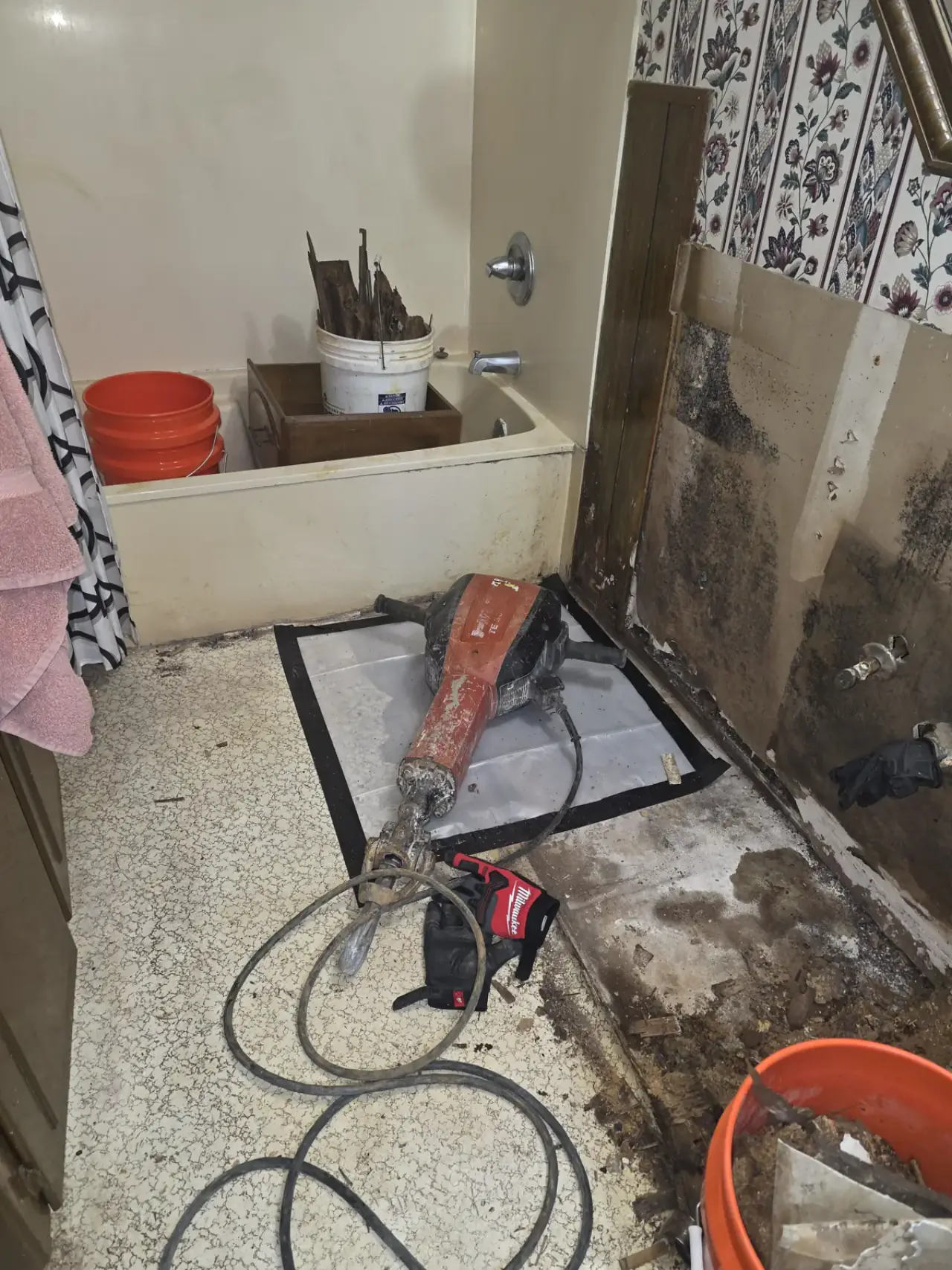
The goal is a single opening in the right place. We narrow down the location before any concrete gets broken, so the cut lands where the leak is and the rest of the bathroom stays put. Guessing at a slab leak leaves a floor full of holes and a repair far bigger than the pipe ever needed.
What a 1980s or 1990s house may be hiding
Homes built through the 1980s and 1990s in this part of East Texas often have polybutylene supply pipe, a gray plastic that was common at the time. It tends to fail without much warning, sometimes at a fitting and sometimes in the middle of a run, and insurance carriers have opinions about it when you file a claim or shop for a new policy.
Older houses bring their own set of problems: galvanized supply that rusts from the inside out, and cast iron drains that crack along their length. When a leak turns up in any of these materials, locating it is only half the answer. The other half is whether patching one spot makes sense in a system that is aging all at the same time.
We tell you plainly. Sometimes a single repair is exactly right and you should not spend a dollar more. Sometimes the fourth patch in two years is the sign that replacing the supply lines is the better use of your money, and we say that.
What the floor looks like when we leave
After the leaking section is repaired and tested under pressure, the opening gets filled with fresh concrete and brought level with the floor around it. Tile, vinyl, or carpet over that patch is finish work, and before anything gets cut we tell you which parts we handle and which ones belong to whoever does your flooring.

A tidy patch matters because a slab leak is stressful enough without the repair looking like damage of its own. It matters later too, for whoever works on that floor next, since a clean, level fill shows them exactly where the old work sits.
Honest about the search before it starts
We look at the actual situation before quoting it. A leak described over the phone could be a worn toilet flapper or a line under the slab, and those are nowhere near the same visit. After the meter check and a look around, you get a real price before any work begins. If the floor opens onto a surprise, work pauses and you hear about it before anything else happens.
Stephen Crutchfield runs the work as a licensed Master Plumber with Water Protection Specialist certification, and Odyssey is veteran-owned and family-run out of Kilgore, about ten miles from White Oak. When the right answer is new pipe rather than another patch, our repiping work is where that conversation goes next.
You can browse finished jobs in photos or read how we approach leak detection across the whole service area. For the town itself, here is all of our White Oak work.
More we handle around White Oak
Emergency Plumbing
For the leak that stopped being hidden and started spraying.
Drain Cleaning
Slow and repeat clogs cleared, and the cause named.
Sewer Line Repair
Buried laterals that have shifted at the joints or sagged.
Water Heater Repair
Tanks that drip at the base or stop making hot water.
Repiping
New supply lines when old ones keep failing one spot at a time.
Gregg County
Every town we cover in the county around White Oak.
What people want to know about hidden leaks
How do I know it is a leak and not just a high bill?
Turn off everything that uses water and watch the meter for an hour or two. If the reading changes or the small leak dial turns, water is leaving somewhere. If it holds still, the higher bill has a different cause, and that is worth looking into first.
Can a drain leak move the water meter?
No. Drain pipes are not under pressure and only carry water while something drains, so a crack in one will not register on the meter. Those leaks show up as dampness, odor, or staining that gets worse after heavy water use in the house.
Why are slab leaks common around here?
The clay under Gregg County swells with rain and shrinks in dry spells, and slabs flex along with it. That movement strains pipe at fittings and wherever it rubs concrete, which over the years is exactly where pinholes and cracked joints begin.
Will you tear up the whole floor to find it?
No. We narrow down the location before breaking any concrete, then open one section where the leak actually is. The rest of the room stays as it was, and the opening gets filled level with fresh concrete once the repair has been tested.
Should I worry about polybutylene pipe?
If your house was built in the 1980s or 1990s, it is worth knowing whether you have it. Polybutylene tends to fail suddenly rather than slowly, and insurance carriers ask about it. We can tell you what you have and whether repair or replacement makes more sense.
Is there a travel charge to come out to White Oak?
White Oak is about ten miles from our Kilgore shop and inside our full service area, and most of that area carries no separate travel charge. If a trip ever did involve one, you would hear about it before we put the visit on the schedule.
Meter still moving?
Call and tell Stephen what the meter did during your test. He will ask a few questions and give you a straight answer on what happens next, from the plumber who would do the work.
Call (903) 570-3051Want it written down first?
Send the readings, what you have noticed, and roughly when the house was built, and we will chart the job before the first visit.
Odyssey Plumbing Co is regulated by the Texas State Board of Plumbing Examiners (TSBPE), 7915 Cameron Rd., Austin, TX 78754, (512) 936-5200, tsbpe.texas.gov. Stephen Crutchfield, Responsible Master Plumber License M-45845.