
Finding the Hidden Leak Under a Longview Home
A rising bill, a warm spot on the floor, a meter that will not sit still. We narrow it down before anybody opens concrete.
The evidence usually arrives before the water does
Most people do not call us because they can see a leak. They call because something is off and they cannot explain it. The bill climbed for no reason anybody can name. One patch of tile stays warm underfoot. A faint sound of running water carries through a quiet room with no fixture running anywhere.
Those are all real symptoms, and none of them tells you where the leak is. By the time water shows up somewhere you can point at, it has usually traveled a good distance from wherever it left the pipe. Chasing the wet spot is how people end up opening the wrong wall.
What we hear most often from Longview callers
- A water bill that jumped without any change in how the household uses water
- Warm or damp flooring in one area, often a hallway or a bathroom
- The sound of running water when every fixture in the house is off
- A musty smell in a closet, a cabinet, or along one wall
- Cracking or lifting in flooring above a slab
- Low pressure at fixtures that used to be fine
Any one of those is worth a look. If several of them are showing up together, it is worth a look now rather than later. Tell us what you are seeing and we will work out whether it needs a visit.
Ruling things out, in order, before anything gets opened
Leak detection is mostly elimination, and the order matters. Every step that rules something out for free saves you from paying to open a floor for no reason.
First: is it losing water at all
The meter settles a surprising number of calls. With every fixture off, a meter that keeps creeping means water is leaving the system. A meter that sits still points the investigation elsewhere, and that is useful news, not a wasted trip.
Second: is it supply or drain
These behave differently and get found differently. A pressurized supply line loses water constantly, whether or not anybody is home. A drain leak only shows itself when something upstream runs, which is why a leak that comes and goes tends to be on the drain side.
Third: which line, and where
Isolating sections and pressure testing them tells us which run has the problem. Acoustic listening equipment narrows the location within that run, because pressurized water escaping a pipe makes a distinctive noise that carries through slab and soil.
Fourth: confirm before cutting
Where a camera can travel the line, we send one and look. Every earlier step exists to make this last one small: we open the smallest area that reaches the leak, not the area that would have made it easy to find.
The cheapest part of this job is the part where we rule something out. That is worth doing thoroughly.
Why slabs around here give up their leaks reluctantly
Gregg County sits on the old East Texas Oil Field, and the clay swells with rain and shrinks hard in a dry summer. That seasonal movement is rough on rigid pipe. A slab flexes with the ground under it, and a copper or galvanized line cast into that slab has nowhere to go when the concrete moves around it. Joints that were sound for decades start weeping at exactly the point where the movement concentrates.
Practically, that means a slab leak here is frequently not a manufacturing defect or a bad install. It is decades of a house rising and settling with the weather. It also means the leak is rarely where the damp appears, because water leaving a line under a slab follows whatever path the fill and the concrete give it before it surfaces.
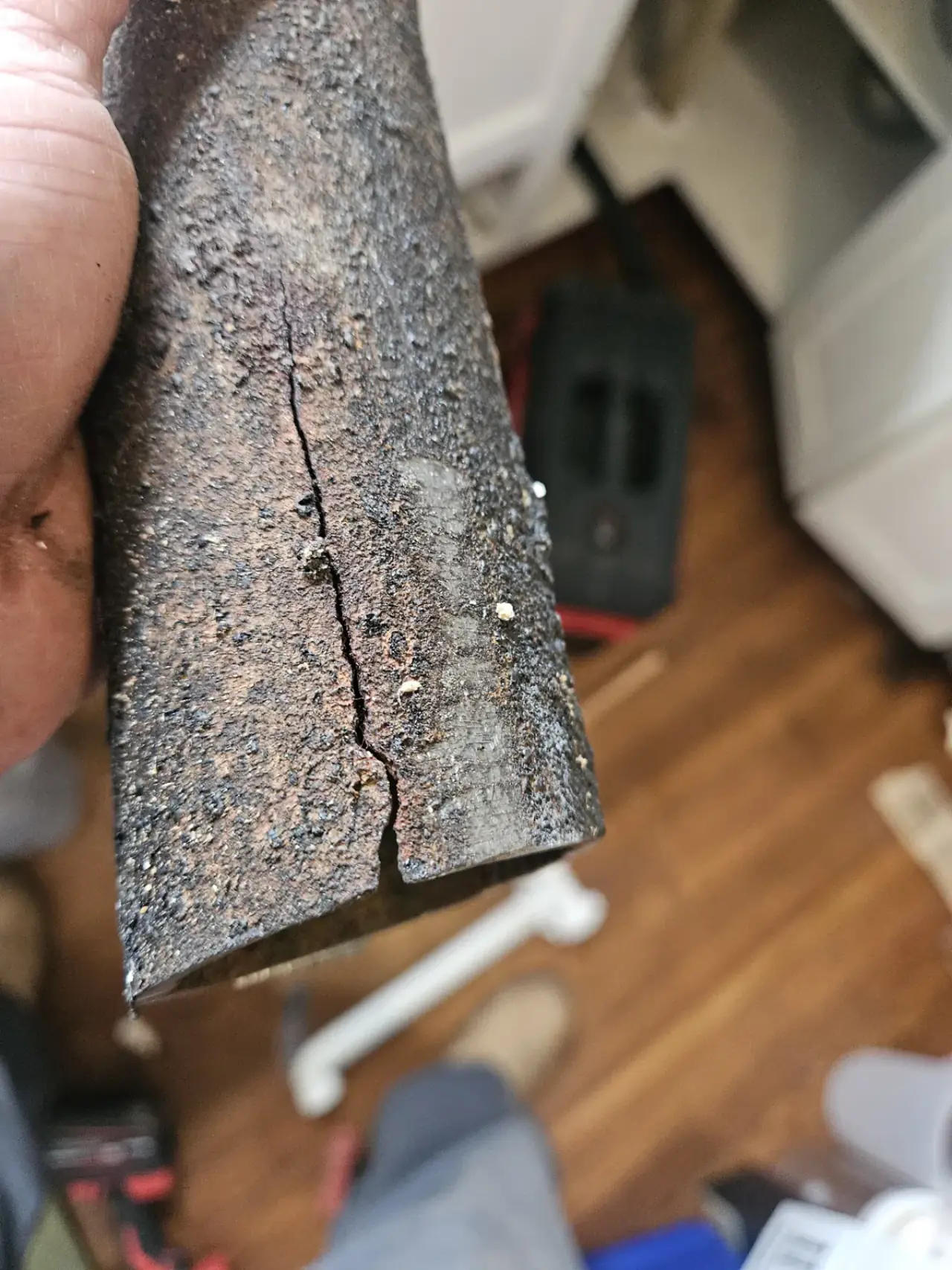
Housing compounds it. Postwar ranch construction runs across Longview, and older stock brings galvanized supply and cast iron drains. Galvanized corrodes from the inside until the wall thickness gives out. Cast iron cracks and scales. The 1980s and 1990s neighborhoods bring polybutylene, which fails suddenly and which insurance carriers have opinions about. Knowing which is under your house changes what we are listening for.
Why we would rather find it than replace around it
There is a version of this trade where the answer to a hidden leak is always a repipe, because a repipe is the bigger sale and nobody ever has to locate anything. Sometimes a repipe genuinely is the right call, and when it is we say so. But one failed joint in a sound system does not need the whole system replaced.
What we hand you at the end of a diagnosis
A location, not a guess
You find out where the leak is and what is leaking, in plain language, before any decision about repair gets made.
A real price before we start
Once we know what we are dealing with you hear the number. If we open something and find a surprise, we stop and talk to you rather than adding it quietly.
The honest option list
Sometimes that is a small repair. Sometimes it is a bigger conversation. You get told which one this is, including when the answer is the cheaper one.
Working this end of Gregg County
Longview sits about 11 miles from our shop in Kilgore, comfortably inside the area we work every week, and it is inside our 75 mile residential band, so homeowner work is on the table alongside commercial and industrial jobs. This is our home county and the largest share of what we do.
You have plenty of plumbers to choose from in a city this size, including some large operations with real advertising budgets. What a small shop gives you instead is that the licensed Master Plumber who diagnoses the problem is the one accountable for the repair. On a leak call that matters more than almost anywhere else, because the diagnosis is the job. Get the location wrong and everything after it is wasted money.
Stephen Crutchfield handles the plumbing as a licensed Master Plumber, holds a Water Protection Specialist certification, and is the one who picks up when you call. Nearly all of our work arrives through repeat customers and neighbors passing the number along. If you would rather see the work than read about it, look through photographs of jobs we have finished.
Other work we take in this city
Emergency Plumbing
Burst pipes, sewer backups, and no-water calls answered around the clock.
Drain Cleaning
Slow and stopped drains cleared, with a camera check so it stays clear.
Water Heater Repair
Anode rods, thermostats, and elements, plus a straight read on when a tank is past saving.
Sewer Line Repair
Root intrusion, breaks, and offsets repaired with minimal digging.
Leak Detection Across East Texas
The same diagnostic work everywhere else we cover.
Repiping
Whole house repipes when patching the same old system stops adding up.
What people ask us about hidden leaks
Do you have to break up my floor to find it?
Not to find it. Acoustic listening equipment and pressure testing narrow the leak down to a small area first, and we only open the floor once we know where the leak actually is. That usually means a patch rather than a demolished room.
My bill went up but I cannot see any water anywhere. Is that a leak?
It might be, and the meter will tell us a lot before anybody drives out. If every fixture in the house is off and the meter is still creeping, water is leaving the system somewhere. If it sits perfectly still, the answer is somewhere else and you have saved yourself a repair you did not need.
How long does the diagnosis take?
Most residential leaks are located in one visit. Complicated slab or irrigation leaks occasionally take longer if the line runs a long distance, and if that is where yours is heading we tell you while we are still standing there.
Should I just repipe the house instead?
Sometimes, but not usually, and not before we know what failed. One bad joint in a system that is otherwise sound does not justify replacing the system. If your pipe is at the end of its life and patching it is going to be a yearly event, we will say that plainly instead of letting you find out one leak at a time.
Can a leak under the slab damage the house itself?
It can, which is the reason not to sit on one. Water under a slab washes out the soil supporting it and works its way into flooring and framing above. The plumbing repair is almost always the smaller half of the bill once that has been going for a while.
Do you find leaks for businesses as well as homes?
Yes. Commercial and industrial work is a heavy part of what we do in this county, and the diagnostic approach is the same. The difference is usually scheduling around when the building is quiet enough to listen properly.
Rather just describe it out loud?
Describe what you are seeing to Stephen directly and he will tell you what it usually turns out to be. A Master Plumber on the phone beats a dispatcher reading from a script.
Call (903) 570-3051Rather put it in writing?
Mention the meter reading and where the damp shows up, and the search starts narrow instead of opening walls at random.
Odyssey Plumbing Co is regulated by the Texas State Board of Plumbing Examiners (TSBPE), 7915 Cameron Rd., Austin, TX 78754, (512) 936-5200, tsbpe.texas.gov. Stephen Crutchfield, Responsible Master Plumber License M-45845.